Tabs

Monday, June 9, 2014

Macbeth's Speech

Hang out our banners on the outward walls; The cry is still 'They come:' our castle's strength Will laugh a siege to scorn: here let them lie Till famine and the ague eat them up: Were they not forced with those that should be ours, We might have met them dareful, beard to beard, And beat them backward home.
What is that noise?
I have almost forgot the taste of fears; The time has been, my senses would have cool'd To hear a night-shriek; and my fell of hair Would at a dismal treatise rouse and stir As life were in't: I have supp'd full with horrors; Direness, familiar to my slaughterous thoughts Cannot once start me.
Wherefore was that cry?
She should have died hereafter; There would have been a time for such a word. To-morrow, and to-morrow, and to-morrow, Creeps in this petty pace from day to day To the last syllable of recorded time, And all our yesterdays have lighted fools The way to dusty death. Out, out, brief candle! Life's but a walking shadow, a poor player That struts and frets his hour upon the stage And then is heard no more: it is a tale Told by an idiot, full of sound and fury, Signifying nothing.

The Three Wiches

The three witches are seen a one entity in Macbeth. They are shown together and unanimously agreeing on certain aspects of their beliefs. I think the witches each represent a timely aspect of Macbeth's being. For example, in ACT 1 scene 3, the first Witch says, "All hail, Macbeth! Hail to thee, Thane of Glamis!" the second witch, "All hail, Macbeth! Hail to thee, Thane of Cawdor!"; and the third, "All hail, Macbeth, that shall be king hereafter!". This represents the Macbeth's past, present, and future. The witches first confirm their identity to Macbeth, saying that they know who he was and what he is now, but more importantly, tells him who he will become. This becomes particularly true when Banquo notices that Macbeth is unwell after hearing the witches hail him. Macbeth is shocked that he has been watched all his life and is quite confused with the story that he will become King.


Again, the witches are so important because they are basically the inciting incident to the story of Macbeth. The introduction of this character (witches are one entity) places the play in a "predetermined" state, as Macbeth's life in a predetermination. I enjoy the use of this character because I considered whether Macbeth was the person to take matters into his own hands without the use of the the witches clairvoyance. However, I think Macbeth would also have taken matters into his own hands, since Lady Macbeth is also influencing him as well as the witches. The witches can certainly teach us that life is not simply a straight line, it is a series of twists and curves, corners and edges, but if you set you mind to one thing in specific, you will definitely be able to achieve the goal you desire. This lesson is taught in the hard-way through the acts of Macbeth.

Destiny and Fate

Destiny--n. something that is to happen or has happened to a particular person or thing; lot or fortune.
The predetermined, usually inevitable or irresistible, course of events. (From Dictionary.com)


Personally, I don't believe in destinies. The reason is, is that there are so many people in the world that may have chances with fate as well. For me, since I've transferred so many times, I have tendency to hold back human interactions because I know that it is "predetermined" to leave this all behind. Which is the reason why I am so great at time management. In addition, destiny and religion goes hand in hand. For example, Christianity believes that the world will end soon, and the fact is, those who do good will receive everlasting love with God in heaven, whereas the evil will burn in the everlasting lake of fire (what a pain!). This is similar to destiny, for whatever you do, you get to have two choices, shall you choose the fire or the love, it is your choice. However, Christians also believe that God is loving and has a predetermined path for every individual, although it seems contradictory, I do believe that God is a figure that people can look up to and adore. I, on the other hand believe there is no "destiny" and you must choose your own path; make your own destiny. 
For Macbeth however, in a time where witches are seen as powerful and mysterious creatures that work with magic, the witches are very influential. The glory and the praise: "Hail! Hail! Hail Macbeth!" (Act 1 scene 3) is captivating for a small nobility of Macbeth. Of course he will take matters into his own hands. For this reason, the witches are so important. Whether or not Macbeth does try to murder his authorities, the witches obviously played in Macbeth's part. This is why I believe that if Macbeth lived in modern society, he would be a politician. The witches would be his campaign managers, but they would just tell him, you don't need to do anything, you'll win. It's almost like reverse psychology. However, as we all know, Macbeth does do something, and that was to (SPOILER ALERT) kill King Duncan. (or does he?)
This is ACT I scene 3, of Macbeth, where Macbeth speaks to the witches:

What is known

Shakespeare is known he his great tragedies and comedic twists. The only things I knew about Macbeth came from those who studied it before me and complained to me about the assignments. Therefore, all I knew was that Lady Macbeth is a crazy psychopathic genius that consumes her husband. Although the Lady does not appear in the first act, foreshadowing of a terrible deed comes when Macbeth talks to the witches. The play incorporates a whole bunch of Old-English words that completely makes no sense. However, after watching the videos of the act, I got a better understanding of the situation, for the music basically tells you when you should feel sad, angry, happy, or in the cast of the first act, concerned.

I found that the story was written in the dialogue form. I knew that the story was a Shakespearean tragedy, but it did not occur to me that the entire story is a script of the play. I really doubted the fact that the entire play was written in iambic, so after every line I read, I would consider the line with my hands and start counting stressed and unstressed syllables. I also looked around YouTube and found that Patrick Stewart played Macbeth in a BBC version of the play. Therefore, since Patrick Stewart plays Macbeth, you would know that Macbeth is a worthy play to read. Since Shakespearean plays are so similar in the tragedies. When the witches sang and chanted the "double double toil and trouble song" in ACT IV scene I, I admit, that I sang along while reading the text. Here is ACT I scene I, from Macbeth:


A part of the play, also known as a part of history I disliked was the fact that Macbeth, King Duncan, and the other nobility did not fight at all. Instead, they greeted the victorious Captain, dripping in blood, yet the Captain still needs to be polite and blessed in meeting "his grace". Perhaps this was one of the reasons I never really had a good impression of Macbeth. This story takes place in the middle ages, but to me, any middle-aged story without a dragon, a ring, and elves is a meaningless one. The witches can be considered fantastical, but they did not use any of their magic to put a spell of Macbeth. In other words, the events and murders by Macbeth is the result of his own actions.

Wednesday, January 30, 2013

POV FABLE


First Person POV - 0:00
Third Person Limited - 2:49
Third Person Omniscient - 5:35
Third Person Objective - 9:16

Moral: Yield to all and you will have nothing to yield.

Sunday, December 9, 2012

Final's SAT WORDS

If I remember intrepid, I'll remember trepid.
Trepidation (n.) - trepid and feafull, quivering.  Trepid is the opposite of intrepid, which means to be without fear, therefore, trepidation is the noun of fear.

Ubiquitous (adj.) - omnipresent, present simultaneously everywhere.  Ubisoft is a game developing company that sells its merchandise world wide. I recently played one of their games.

Unwieldy (adj.) - difficult or unable to use.  Cannot be wielded or used.

Usurp (v.) - seize or take control without authority.  There is this character named Usopp in a pirate comic series called One Piece, and he often, when the captain is not around names himself the captain.

Venerable (adj.) - respectable due to age/wisdom.  A vendor often is a respected person, for he or she brings merchandise and equipment for trade, and if you are offering good amounts of trade, then you will receive good fortune. The trade is a metaphor for age.

Edowada, sound familiar?
Vindicate (v.) - to clear, and clean from accusations or blame; to provide evidence to prove innocence.  A Vindicator is one of my armors on a game I play, it plays as a character that eliminates crime.

Visage (n.) - the face, or any reference to that face; appearance conveyed by a person's face.  A visage is an apparatus that covers or conceals a person's face.

Wallow (v.) - roll around lazily; devote to something (contradictory).  Waddling is another action that involves side to side movement and ends with a slide on the stomach.

Wary (adj.) - watchful, alert; characterized by caution.  This word sounds devastating, and such that you need to worry. At first I thought is was Weary. but they have similar definitions.

Zeal (n.) - wanting very much for someone to do something; enthusiasm. Zeal and zest are words for something desired and especially hoped for.
When I eat lemons

Sunday, December 2, 2012

Week 16 SAT Words

Substantiate (v) - verify, to confirm; provide evidence.  Basically this word means to give proof, and what other way to prove something is to sustain evidence and support it.

Subtle (adj.) - unclear, very few information, quiet and delicate.  Subtle is often pronounced sub-til, it is clever that the silent "e" and subtle, because it causes people to pronounce the word incorrectly.
Subtle and clever, very clever

Sufficient (adj.) - enough.  Suffixes are parts of words, but sometimes it is enough to have their own definitions, without the prefix.

Superficial (adj.) - lacking in literal depth, along the surface.  At first I thought the word meant lacking in deepness of meaning, very straight-forward, but turns out, I thought too deeply.

Superfluous (adj.) - more than enough.  Super means to have a lot of, and the "ous" at the back also means to have a lot of. Therefore, Superfluous means a lot.

Taciturn (adj.) - silent, utter-less   If you are part of a tactical unit, then you are highly trained professionals that go on missions. You usually have to keep quiet in those kind of missions.

Tactful (adj.) - polite, careful, and thoughtful.  You are tactful if you use your tactics to manipulate people and carefully lure them into your trap.

Tangent (adj.) - a straight line or plane that touches a curve or curved surface at one point.  Math helps to remember.

Tenacious (adj.) - strong and fast at holding firmly together; persistent.  Tentacles are very tenacious, they stick and hold things firmly due to their suction ability.

Transient (adj.) - temporary, not lasting, existing in a short time.  Transient means temporary, so does transfer or transit, because these words all relate to staying for a short amount of time.


Sunday, November 25, 2012

Week 15 SAT Words

Sagacity (n.) - wisdom.  Like a sage, his sagacity lingers throughout the endless saga of textbooks.

Sanguine (adj.) - optimistic and cheerful.  I've always thought that sanguine means deadly, horrific, and evil, but it is not! That is one way to remember this word, but also, my favorite pasta is linguine!

Sans (adj.) - without.  You cannot go through a childhood without making a PowerPoint without using Comic Sans as the font. Sans also seems like a prefix or suffix that does not mean anything without the other part.

Schadenfreude (n.) - enjoyment of the misfortune of others.  I am not a racist, but stereotypically  this word is  German and Nazis have a reputation consisting schadenfreude".

Scrutinize (v.) - meticulous examination and careful observation.  When you try to see something up close, or carefully, you usually squint to make sure you get all the details. Scrutinize is like squinting.

Consider Face

Shrewd (adj.) - keen and clever regarding practical matters; intelligent at practical affairs.  A shrew is a rodent that is nocturnal. Although owls are nocturnal too, they dig tunnels of holes underground to avoid getting caught by prey. A shrew knows his way around.

Sovereignty (n.) - a nations power to govern itself.  Throughout history and social study classes is is important to study the Independence and sovereignty of one's nation, for other nations will try to claim the land.
Thomas Hobbes Leviathan

Spontaneous (adj.) - very enthusiastic and sudden movements.  People describe me as spontaneous, I know what it means. In addition, Sponge-bob is also very spontaneous, and he makes lots of awkward and "irregular" movements.

Spurious (adj.) - false, phony.  The San Antonio Spurs often claim to be the best, (but hey, who doesn't) but everyone knows Miami Heat and Chicago Bulls are the best.

Submissive (adj.) - weak, meek, ready to give in. submit means to turn something in, and submissive is the quality of turning something in.

Saturday, November 17, 2012

Week 14 SAT Words

Rancor (n.) -deep, bitter feeling, ill-will; hostility.  In Scandinavian Mythology, and in a game that I play, Ragnarok is (second coming of Christ or Judgement Day)the final battle between good and evil. Ragnarok is one of the weapons in game, along with two others, Sanguine and Caladbolg. All three are weapons of mass destruction.
From Right: Ragnarok, Caladbolg, Sanguine

Recession (n.) - period of time where the economy falls; withdrawal or receding.  Currently the world is living in a time of depression, for it has been five years since the economic downfall. However, people continue to call it a "recession" because it gives a sign of hope for the economy to restore.

Reclusive (n) - a nonconformist that lives  against society, isolated or withdrawn.  Exclusive means to be VIP, rich, special, and famous, but REclusive means to be against exclusive.

Reconciliation (n) - that process of compromising after a quarrel.  Recon is another word for Reconnaissance, or resistance. Ciliation seems to me means something to do with stopping. How do you stop a resistance? Make compromises.

I did it and survived, I warn you, do not Google dress up
Redress (v) - to note, rephrase, or set right again.  To "re" address someone, or to literally dress someone up again.

Renovation (n) - process of restoring back into a better condition or state.  To renovate means to make something better.

Resilient (adj.) - quick to recover, springing back.  Resilient seems to resist, so once you do something to an object, it is resist, recoil, recover, or anything that is against you force applied onto the object.

Restrained (v) - to keep from, avoid.  Restrain me if you must, but I will not give in to write a definition to this word.

Rhetoric (n) - the techniques for using language effectively, eloquently, and persuasively.  Communications has taught me quite a number of ways to persuade people, it is extremely useful when comes to speeches and by learning about fallacies and how to speak properly, it is a addon to learn this word.

Romance (n) - a novel characterized by depicting characters with intent of love or idealized events.  When people go to Rome, or Paris, even large cities in Germany, basically Europe, which was controlled by the Roman Empire, they say how beautiful and romantic it is to be there.


Friday, November 9, 2012

Week 13 SAT Words

Pretentious (adj.) - characterized by showing importance; ostentatious.  If you are an average person, which I agree on average, most people are in the world, they seem to pretend to have the ability to do something or popularity. And they are very "pretend"tious.

Procrastinate (v.) - to delay unnecessarily.  The first time I heard this word, had a connotation of daydreaming, leading into a delay of time.

Profligate (adj.) - shamelessly wasteful; immoral way of wasting.  In the early 1800s, during the Napoleonic wars, American, whom was neutral traded with the British and the French. They did not have large ships with large crews, for Jefferson had destroyed them, but had Frigates, which were fast, cheap, and produced in large quantities. These ships were constantly seized and attacked by the British. Although these ships were fast, they did sink.

Frigate on the Left, British ship on the right.
Mouse-over me!
Provocative (adj.) - ability to provoke, or persuade, stir up, anger, or annoy.  Provocatice is pronounced provo[ka]tive, not provo[sa]tive ot provo[kay]tive, another fine example of the annoying English language.

Prudent (adj.) - wise, judicious, cautious, or careful.  When people drive, it is prudent of them to not be prone to dent their cars, thus, being careful when they drive.

Pugnacious (adj.) - like to fight, quarrelsome, fond of fighting.  Pugs are really ugly and I dislike them, whenever I see one, I just have the tendency to kill one. (Over exaggerated).

Quadrant (n.) - a quarter of a circle; a specific area or part of something.  In math classes, involving graphing or any sort of solving polynomial equations, the first vocabulary you learn is the parts of the coordinate plane.
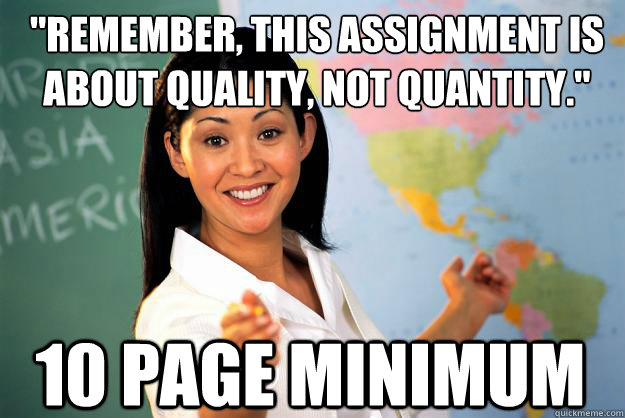
Quantitative (adj.) - existing in large quantities, numbers. Teachers often recite "quality, not quantity" when writing an essay to prove that the quality of something in worth more than the multiple numbers of another, in an essays case, more evidence, less repetition.

Querulous (adj.) - complaining, and irritating.  While I was typing this word out, I kept saying and typing querluous, instead of querulous, I is extremely annoying to press the backspace, type the wrong letters again, and press backspace continuously.
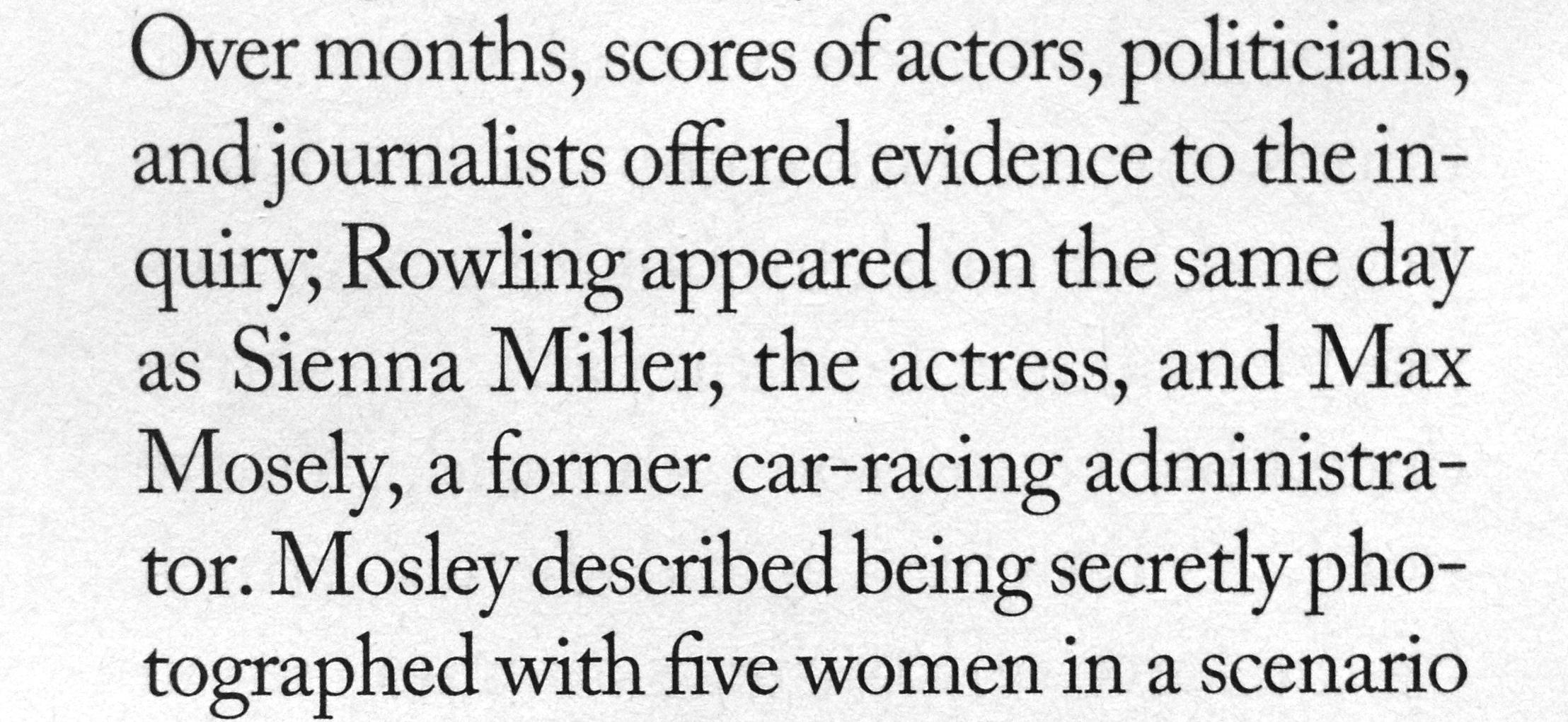
Mr. Mosely, not Mr. Mosley.

Quixotic (adj.) - impractical, unpredictable; resembling romantic emotions.  Firstly the word is impractical. Secondly, I see the word exotic in the word, meaning different or unorthodox.