Tabs

Tuesday, September 25, 2012

Week 7 SAT Words

Extenuating (adj.) - minimize, moderate, guilt diminishing.
It's the opposite of extend. Extend means to add to and go further, but the opposite means to lessen, or decrease the amount of seriousness.

Fallacy (n.) - illogical statement involved in an argument.
Communications taught me a lot about fallacies. On a regular basis, I can say that I identify one or more fallacies in my surroundings. Band-wagoning occurs the most, unfortunately.

Fascism (n.) - extreme socialism.
Again, I have learned many things in Social Studies, one of which, is fascism, or extreme socialism. Italy was a Fascist country during World War II due to German influences from Hitler.

Firmament (n.) - appearing to look like heaven.
To be able to work at a firm is a glorious job. The reason is, everyone is formal and in suits, you are looked upon, and it's a lot of pay, feels like heaven.

Fortuitous (adj.) - lucky, fortunate.
Fortunate and "ous", meaning very fortunate.

Frugal (adj.) - sparing, not wasteful, involving economics.
Fungi are like the Asians of the Plant Kingdom, for they are not wasteful, eating all the leftovers and leaving no trash.

Fungible (adj.) - able to be traded for free.
Fungus are also valueless according to general measures. Though some may be costly, most people do not like mushrooms because they are not pretty or in need of many nutrients. Thus, they have no cost due to the large amounts that are grown.

Furlough (n.) - ephemeral leave from military duty.
The fur is lost! Foxtrot (Fur) Lima (Lough).

Genocide (n.) - process of eliminating an entire race of people.
Genes are what makes a race, and "cide" usually has something to do with death. Also learning in Social Studies.

Germane (adj.) - relevant, related significantly.
In all of English Cultures, including, British, Canadian, American, etc. all of them are relating to German ancestry. The Germanic Tribes of Northern Europe invaded the Celts/Kelts and made most peoploe adopted the hegemonic culture.

Turn around, there might be something behind you.

Paranoia (n.) - A mental illness caused by fear or anxiety that forces people to generally think whether something bad or nothing at all will occur.


Kino is not paranoid. Although it may seem that he is, Kino, as a careful and loving person, was not paranoid at all. However, he was taking precautions. In fact, people tend to take precautions; we prefer it. Not only do we prefer taking precautions, we also tend to think of possibilities that might occur, and deal with them. This is clearly different from Paranoia. First of all, Kino did not have any mental illnesses. Secondly, although Kino says he fears "everyone", it is not true, because the only things we fear in the world is the lack of understanding mysteries. For instance, talking in front of people in a fear that many people have due to the fact that they do not know what the audience is going to do. Kino was well aware at the very least, the worst case scenario in this situation was that the pearl was stolen. His expectation of everyone stealing the pearl was extremely high. He knew what was to happen, thus, not paranoia just precautions.


Tuesday, September 18, 2012

Jinx!

"It is not good to want a thing too much. It sometimes drives the luck away. You must want it just enough and you must be very tactful with God or the gods." John Steinbeck, The Pearl
From Meme Generator*
      Rain, one of human being's worst nightmares, filled with mystery and gloom, characterized by its evil intent, falls upon the 8 year old me, eager for a fun weekend trip. Looking forward to this, during school I begin to wonder to myself when class will ever end. Once school ended, it seemed a lifetime before I got home and prepared for the trip. Previously, the week had gone by without any rain at all; clear blue skies of the suburban Canadian residents. Despite the fact the it had not rained, it also reported on the news that there will be no showers during the weekend. 

      Relieved, I set back into my chambers and began writing homework regardless of whether it was to rain or not. Unfortunately, the current study on the water cycle begged to differ, it pranced around the diligent mind, causing digression; where it led to a series of thoughts regarding rain. Coping with the thought of rain on a fun trip during the "48 freedom", I prayed and hoped that it will not rain. Fortunately, there was NO RAIN on the weekend; it was the clearest, bluest, sunniest, most magnificently beautiful day that I have EVER seen in  my life. Indeed, it had rained, and the trip was postponed.

      The mind plays tricks on the body, even when we know that the thought will not affect the environment. If you think something too much, it may jinx the thought and will not happen. I believe the body determines the expectation of whether something will occur, but the mind plays tricks; and when it does not occur, one may think it was due to the amount of thought they put into the expectation, in other words, jinx. Noetic science studies how the human body can control physical objects through thorough and meticulous thought. However, Noetic Science has not yet been fully developed or researched, but likewise in reality, people tend to over-think and realize that what they thought impacted on the result of the thought.
*Don't want to get sued.

Week 6 SAT Words

Emulate (v.) - to follow an example, imitate to equalize.
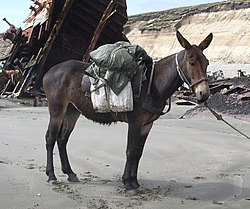
Back then, a mule is used to carry heavy loads for the humans, following behind their owners.

Enervating (v.) - to make someone tired.
Energy fades and makes someone tired.

Enhance (v.) - to enlarge, or raise to a higher degree; improve.
Through experience in the online RPG world, enhancements will improve the quality and the abilities of your weapon or armor.

Enmity (n.) - feeling of antagonism, ill-will.
It sounds quite mysterious, enmity is queer and creepy.


Ephemeral (adj.) - temporary, lasting only a momentary time.
Funerals are sadly short, everything about the funeral is short, only the grief lasts.

Epic (n.) - a grand story, great and exhilarating.
Epic things are awesome, and an awesome word like this will not be lost in the Mines of Moria, but shines throughout Gondor, like a glowing light-saber.
Epitome (n.) - typical example, stereotype.
eh-pit-to-me? That's how you pronounce it? Typically you would hear people say eh-pi-tom.

Esoteric (adj.) - known to only a small number of people.
"I so terrific" meaning that your grammar is terrible, but do not realize, thinking you are special. Then again, you are esoteric because you are the minority that thinks "I so terrific."

Exasperation (n.) - annoyance or irritation.
Exasperate sounds like exhaustion, and you get exhausted from the frustration and annoyances people troll on you.

Exemplary (adj.) - excellent, worthy, and outstanding.
Super and magnificent, you exempt your awesomeness.

Sunday, September 16, 2012

Super Juana

"Strongest" women I know in my opinion
      Juana is a strong woman that clearly shows her authority and power in The Pearl. Although Coyotito had been stung by a scorpion, she shows little concern of it until she sends people to go for the doctor. The story explains that Juana could stand fatigue and hunger almost better than her husband ever could, meaning she could bear all the hardships that tackled her. Furthermore, she was also a patientobedient, respectable, and a cheerful woman. Juana shows her lack of feminine characteristics based on the descriptions in The Pearl.

      Assuming that Juana was a Native American, Native Americans live in a matrilineal society, where the women have more power over the men. Unlike the European patrolineal society, Juana was probably the head of the community, which granted her power and authority. For example, she would command the spectators to get the doctor and once she was told the doctor would not come, she decided to take the matters into her own hands. Also, in the story, having to hear Juana say that she needs a doctor was a rare and remarkable thing to hear, meaning that she does not ask for the doctor very often. Juana is a women of a Matrilineal society giving her power and authority over others.
Also the "strongest" women I know in my opinion

Tuesday, September 11, 2012

Pop Quiz

  1. Define and give an example Normalizing: An act done by a person to feel in the presence of the past, to make a someone feel comfortable by thinking about things done before. I normalize in Taiwan when I eat Kellogs cereal for breakfast, becauseI used to eat cereal in Canada, making me feel comfortable although I am in Taiwan.
  2. What are three places something can go wrong in communication: In the encode, the sender may not be able to form clear sentence, through language or sound making barriers. Noise also makes communication difficult for reciever to hear. Lastly, the decoding may be be the original thought that the sender sent, while noise potentially have the ability to reduce being able to hear.
  3. Explain what the Iceberg Principle is: The Iceberg Principle is a form of literature that gives few information about the characters, plot, or background of the story. The idea of the principle is to allow the reader to infer about the story to understand and to guess what the situation of the story is with as little information given. It also startles the reader, for there may be several different interpretations to the story because nothing is truely clear.
  4. Provide an explanation and example of Suspension of Disblief: In stories or movies, there are times where a situations that deals with suspense is portrayed to be real, but in reality, it would be physically impossible to have completed such actions without a flaw or such. Suspension of Disbelief shows the reader that only in the story, can this certain task be done, but in reality it cannot. In most Sci-Fi movies, there will be plenty of characteristics that show Suspension of Disbelief, where futuristic robots look, act, and react like humans. However, these robot will not be walking around in a long time, we do not have the technology to form such droids, but for the movies' sake and the beauty of Capitalism, it is portrayed.
  5. What was the metamorphosis in the The Metamorphosis, why?: The metamorphosis was the changes the the family needed to make in order to better suit the functions of the family or lifestyles for they had a giant cockroach living with them. The Samsas were poor, they needed money, and because Gregor no longer provided them with the funds the faily needed, they had to get jobs and work again. Due to the fact that the Samsas son was a giant cockroach, they needed to normalize and get used to that fact. However, it was impossible to live with a giant cockroach, thus they needed to make decisions to benefit the entire family. Their final decision was to kick Gregor out, after a long hesitant days and longsuffering. Before all this, the Samsa were quite happy and money was sufficient, but now they changed all the way to being poor, needed jobs, and most importantly, giving up on their own son.
 

Week 5 SAT Words

Diatribe (n.) - A bitter or hurtful verbal insult.
There is a kind of sauce that is called Tribe, which tastes spicy, but Dia means through and it has the connotation that it tastes worst that spice, thus, bitter.

Digression (v.) - Act of wandering off, or getting unrelated to topic.
It somehow to me sounds like discretion, where in the beginning few TV shows like Futurama, it says viewer discretion is advised, meaning, don't think the wrong way.


Diligent (adj.) - Hard-working.

For many years I have studied English and I worked hard to be at this level, and diligent is a vocab word for my level.


Diligent me
Guess who's underrated

Discredit (v.) - Underrate, dishonor, disbelief.
To Dis credit someone, is to make them un-credited.

Disdain (v.) - To scorn something, criticize, or condescend.
The Jolly Sailor Bold song of the pirates has the verse "I disdain all glittering gold." The song's meaning is that nothing can compare to the man whom she loves, not even gold.


Disenfranchise (v.) - To take away someone's right, especially voting rights.
Merchandise refunds grants a person to return a product, but the 'dis' makes merchandise refunds unavailable.

Divergent (adj.) - To cause separation, or move apart.
To divert something is to change its course of action, lead it into another direction.

Eclectic (adj.) - to select from various sources.
Electric, elective, all sound similar to eclectic, and electronically you elect the sources you want for an essay.


Elucidate (v.) - to make clear, straight forward.
Illuminate the light and show a clear path to the right choices and directions.

Empathy (n.) - showing feeling and react with feeling due to previous emotion.
Empathy, sympathy,same thing.


Tuesday, September 4, 2012

Week 4 SAT Words


Compromise (v.) - to come up to an agreement.
Co means together and promise an agreement, thus to come to an agreement.

Condescending (adj.) - adulating someone making others feel less superior.
A con artist is a clever and sly person, but people do not realize their intelligence and only view them as criminals.

Conditional (adj.) involving, only occurring when something else happens.
When I think of this word, I think of 'but' where you promise to do something 'only if' something is repaid.

Conformist (n.) - a person living without following rules or expectations.
Bohemian Rhapsody was about a poor boy whom needs no sympathy, cause he's easy come easy go, little high little low.

Convergence (n.) - the act of joining things together.
Converge means to join things together, to make them merge or turn in to become something.

Correlation (n.) -  relevance, relation, correspondence.
Co means together, relation means the relevance between two things, thus relating to each other.

Crescendo (n.) - in music, a steady paced increase in volume.
In several episodes of the Little Einsteins, Leo performs the super fast dance to make Rocket go fast. Crescendo was the fastest speed Rocket could go.
It all starts from Allegro, I still can't believe that children are learning SAT words

Deleterious (adj.) - harmful, injurious.
I see Delete, do not delete without backing up.

Deluge (n.) - a large flood or tsunami.
I don't know why but something in Deluge, probably the 'luge' reminds me of a word that correlates to water, perhaps lagoon?

Demagogue (n.) - political speaker gaining power through speech.
Democracy allows the freedom of speech, which is what demagogues take as an advantage to win votes.